
What Makes a Good Damper (vs. What People Think Makes a Good Damper)
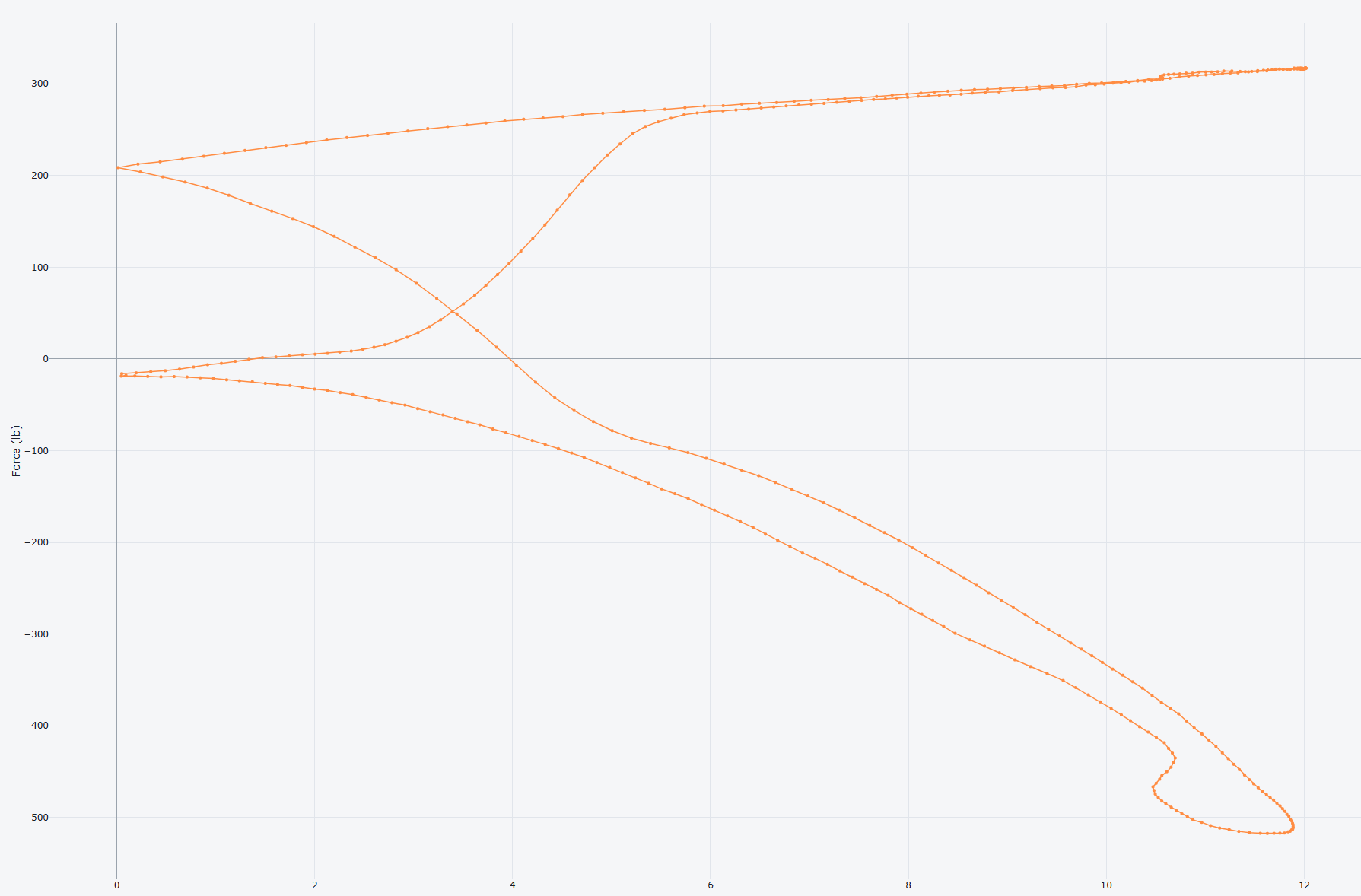
After reading our article on how to read shock dynos, you may be surprised to read that this is marketed as a premium motorsports-grade damper. After investigation? An expensive paperweight that’s worse than whatever you took off. So lets help you figure out how to evaluate what you’re getting.
After years of helping a wide variety of folks across a myriad of classes set their cars up, I've noticed there's a real gap between what end users think separates a good damper from a bad one, and what actually does. Some of these are genuinely important. Some are borderline snake oil. Let's go through them one at a time.
1. Fitment and Ease of Installation
What people think: This is just a baseline checkbox.
Reality: This matters, but people will end up caring far more about not having to source or fabricate their own hardware, and about ease of installation, than they will about the actual performance on the car. If you have to design or make something to get a damper to fit, it's a non-starter for most end users — full stop, regardless of how good the valving is underneath.
2. Ride Quality Over Bumps
What people think: This is a good proxy for damper quality, and honestly, it is one of the things people most strongly associate with a "good" damper.
Reality: It's easy to achieve great ride quality with effort in nearly any hardware. Most of the difference between a "cheap" shock and a "good" shock riding over bumps comes down to horrifically poor valving choices for the use case — a one-size-fits-all damping curve, a cheap linear piston, and adjusters mismatched with that curve just to make things tolerable. The catch: the best-riding setting is usually not the best dynamic-handling setting. People treat that as an either/or trade, which pushes them straight into #3.
3. Adjuster Count
What people think: More adjusters = a better, more tunable damper.
Reality: This is one of the most commonly mistaken associations with damper quality. Because so many dampers ship with mismatched valving for the application, manufacturers lean on adjusters to try to shape the curve remotely close to correct. You'll see this in shocks that dyno effectively identically front and rear on the same car, or run identical curves across completely dissimilar platforms — the same shock on a street car with 200lb springs as on a race car with 1000lb springs. A jack of all trades is a master of none. Adjusters don't do nearly what people think they do, and they're nowhere near as powerful as getting the valving right in the first place. More on this in future posts.
4. How Big the Adjustments Feel
What people think: A dramatic, easily-felt change when you turn a knob means the adjuster is doing something meaningful.
Reality: This is definitely one of the most common misconceptions. Most people set their dampers based on feel, not on actual grip, tire loading, or pace. A huge felt adjustment is preferable to a lot of people regardless of whether it's actually the useful adjustment to make for more grip. People frequently make shock changes not because its the right change, but because it’s a knob away.
5. Hardware With No Glaring Flaws
What people think: This is a "cheap damper" problem that goes away once you spend real money.
Reality: It's genuinely important, but it's a problem regardless of price point. The shock needs to be dimensioned sanely — not too long, not too short — for the ride height it's intended to run at. The design can't contain flaws that generate unnecessary hysteresis or friction. Adjusters need to be designed and quantified to behave intuitively and consistently. Dampers that are the wrong height entirely (common when a manufacturer runs one sizing regardless of end use case), cheap manufacturing, and assembly errors all fall here — and none of that is unique to budget parts. Some of the WORST offenders in this are some of the most expensive shocks we’ve had on our dyno. The priority framing here is simple: the hardware just can't be allowed to prevent you from arriving at #2.
6. The Valving
What people think: Valving is invisible — it's the adjusters and the marketing spec sheet that sell the shock.
Reality: This is the single biggest differentiator between an okay shock and a great one, full stop. A terribly valved "perfect" shock will get outperformed by hardware that's worse but valved correctly for the application. Adjusters are not powerful enough to overcome bad valving, no matter how many you have. Andy Hollis put it best: "Don't buy dampers, buy a damper builder." If your manufacturer offers one valving spec for the car regardless of application, adjusters will never make up for it. If whoever you're buying from can't explain, in depth, why they're making the valving choices they're making for you — and can't flex based on your specific demands — you're getting got.
7. Reaction Speed, Hysteresis, and Friction
What people think: This isn't usually on the radar at all for most buyers.
Reality: This isn't what makes a damper "good" — it's what makes a damper great, and it's where the proof lies once you're spending real money. Lower rod pressure lets the damper react more quickly to an applied force. Lower friction means less noise in the damper forces, letting it behave more precisely. Lower hysteresis — driven mostly by friction and flow-path latency — means more consistent behavior between accelerating and decelerating velocities, which lets you actually choose a damping profile that maximizes grip. No shock in the consumer market nails all of this. Some are good at some things and horrible at others; some are great at some, good at others, and merely okay at the rest.
Dampers like Penske, and to a lesser extent Bilstein and Multimatic, put serious effort into minimizing drag and hysteresis in their systems. Does everyone need that? Probably not. But if you're spending more than $1K a corner, this is what you should be evaluating — everything above that price point should, without any doubt, already have #1-#6 nailed.
The bottom line: being expensive alone doesn't make a great damper, and there's effectively no correlation between damper price and damper quality beyond a floor of around $400/corner. Past that floor, engineering effort — not price — is what lets one damper outperform another, all the way up until you hit extremely motorsports-focused, $2K/damper territory.
A lot of people win on sub-par stuff. A lot of resellers and manufacturers are very good at selling snake oil. Understand what actually goes into a good damper, and make sure you're getting what you pay for.