
Read the Rulebook: The Cheapest Performance Upgrade You Can Make This Offseason
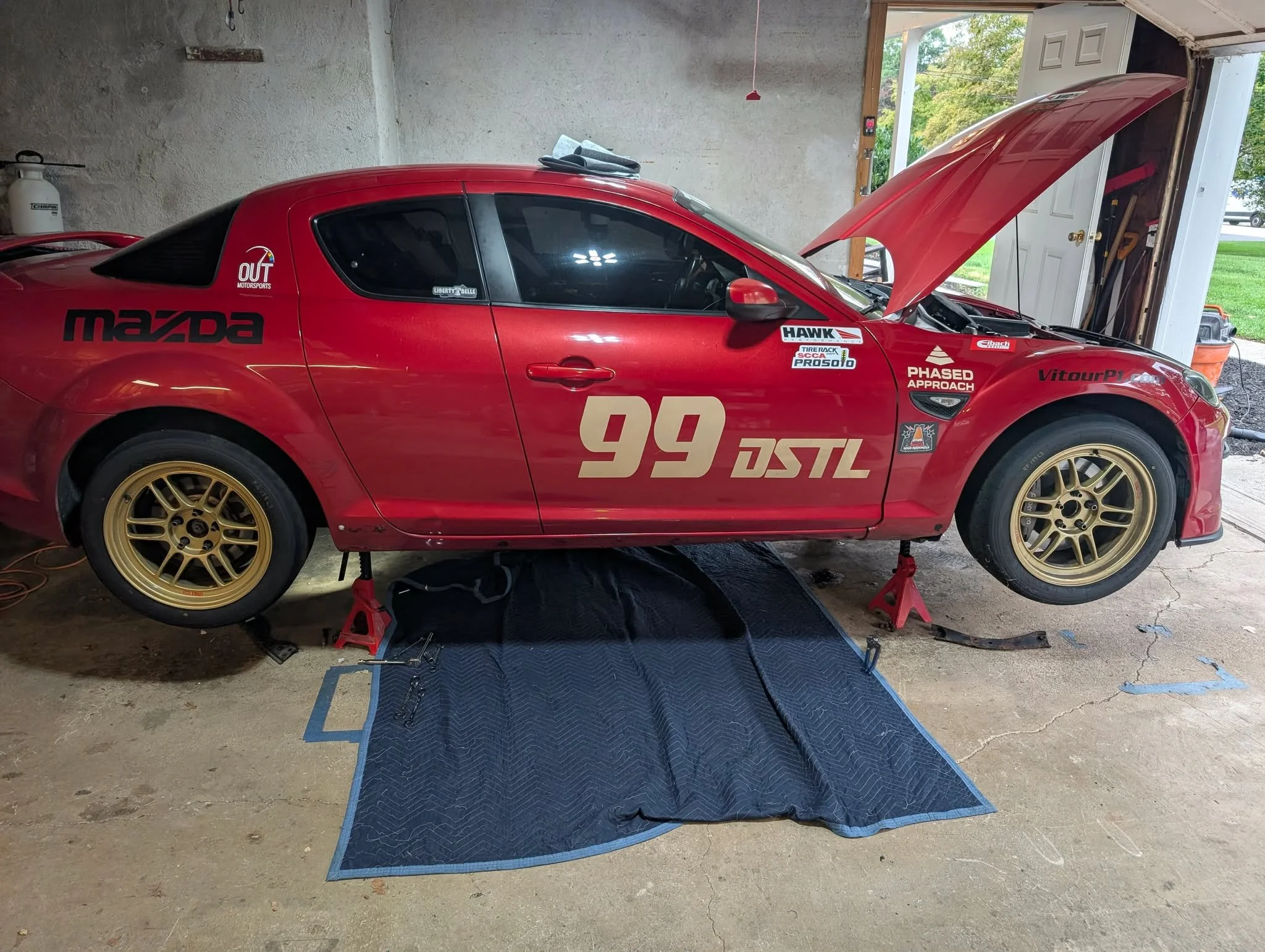
So, I'd like to start with a story. One year, after Day 1 of the ProSolo Finale in Lincoln, I was approached by a fellow class competitor. The competitor asks me "So, are you going to sign on to the protest?". I'm a little confused, so I ask this person what protest they're talking about. "Person X has their battery in the trunk?". I'm now a bit more confused, as this was an explicit allowance in the class I was in, though very few people take advantage of it. "Uh, there's an explicit allowance? It's completely legal." I pull up the rulebook on my phone, show them, and watch them walk back to their group, where everyone quickly dispersed and put their pitchforks down.
Moving a battery to the trunk isn't exactly a revolutionary idea, but in a class where opportunities to move weight rearward are limited, it's a relatively straightforward way to improve weight distribution and keep your lithium battery out of a hot engine bay. And yet, because nobody was selling a bolt-on solution for that particular car, very few people had bothered to do it. The opportunity was sitting right there in the rulebook.
This brought a couple things to light for me. First, even in a class with pretty open rules and a lot of room for individual development, most people were just ordering parts from someone and bolting them on. None of the big aftermarket suppliers for this class offered a solution for this particular modification. Second, it was clear that most people hadn't spent much time actually reading the rulebook.
We collectively spend hundreds, sometimes a thousand hours throughout the year working on our cars, practicing, traveling to events, and competing, often at the expense of time with our families and other activities. I think it's reasonable to spend a couple of hours every off-season paging through the applicable sections of the rulebook. Rules change, our understanding of what's possible evolves, and something we dismissed as unimportant a few years ago might be the best upgrade we can make to our cars today.
Most people approach the rulebook with a modification already in mind. They want to install a particular part, so they open the rulebook to see whether it's legal. I think that's backwards. Instead, start with the rulebook, understand everything you're allowed to change, and then figure out which of those allowances you can use to make your particular car faster.
1. Download the actual rulebook, the most current copy, for your class. It's also good if there's a way, like with SCCA FastTrack, to review things that may or may not be coming down the road, as those can likely impact your decisions going forward. It may not be worth spending effort on an upgrade that will only be legal for one year, or on a car that is going to be quickly rendered uncompetitive.
2. Figure out which parts apply to you. Some classes "build" on rules from more restrictive classes, so it may be important to note things there that you also may be able to take advantage of. Don't make any assumptions that either because something is "popular", it is legal, or that because nobody else is currently doing it, its not.
3. For every applicable paragraph, evaluate the limit of the rules versus how your car can better take advantage of that relative to its present state. Some things may be obvious (such as a missed allowance as in the story above to move weight rearward in a class that provides few opportunities to do so). Others may not be (things like being able to make a particular bushing that greatly improves the performance of the suspension in a particular way). Don't overlook things that at first glance come off as mundane, or esoteric. Things can often pop up here that are unexpected. A manufacturer may have superseded a part with something that has either reduced weight or improved performance. Don't just consider what a rule was intended to allow. Pay attention to exactly what it says you can and cannot do. Sometimes the wording permits considerably more flexibility than the most obvious interpretation suggests. For each line in the rulebook, jot down a quick idea on any ways your car could improve upon them. At this stage, it isn't really important to determine whether it's worth doing, or how you'd accomplish it, just that it's possible.
Here are some questions to keep in mind as you work through the rules:
Can I remove weight?
Can I move existing weight to a more advantageous location?
Can I improve suspension geometry, alignment, or adjustability?
Can I improve mechanical grip or reduce unwanted compliance?
Can I improve power delivery, gearing, or drivability?
Can I improve cooling, reliability, or thermal consistency?
Can I reduce aerodynamic drag or increase useful downforce?
Can I improve ergonomics or make the car easier to drive consistently?
Can I make an existing component work better without replacing it?
Does this allowance enable another modification that was previously impractical?
Imagine your class permits replacing a particular suspension bushing. Most people might interpret that as an opportunity to install a stiffer aftermarket bushing. But what if the rule allows you to change its material, dimensions, or design within certain limits? Could you reduce unwanted compliance in a particular direction? Could you improve the suspension's behavior under braking or cornering loads? Could you fabricate a solution that addresses a specific weakness in your car? The important point isn't that every bushing allowance permits these modifications. It's that reading the exact wording may reveal opportunities beyond simply purchasing the most popular replacement part. Of course, just because a rule allows you to do something doesn't mean you should. The goal isn't to maximize every individual allowance, but to identify which ones can actually improve the performance of your car.
4. After step #3, you have a list of a bunch of stuff you can do. Throughout the year, you've probably also come up with ways you can improve your car. While modeling how much a given upgrade will improve performance is outside of the scope of this particular article, you should be able to at least have an idea on which items of your list are worth pursuing. Prioritize it. Go for high-value, low-effort or cost items first. Sometimes this may require learning a new skill to take advantage of, or making friends with people who already have this skill. While we're now more than capable of fabricating our own parts in-house, for years we relied on friends with lathes and mills to help us out when we couldn't buy the right solution to our problems. Anything that involves just removing items, or is cheap weight reduction, is usually a great place to start where there isn't a ton of complexity. Beyond that, focus on things that will either fix, or work to fix a known issue with your car, improve driveability, or result in measurable performance improvements above and beyond just fixing things.
5. Build that list into an off-season plan to work through on the car. Stuff takes time. Building an entirely new suspension design, or making a complete set of bushings yourself if you've never touched a lathe is a LONG project. You want to get started early, and most importantly, give yourself plenty of wiggle room when projects inevitably go longer than you think. Leave yourself enough time to test things out before getting to your first event. There's nothing worse than finishing your project the night before your first event, and having it fail while loading it onto the trailer, or before finishing your first lap or run. Don't just leave yourself enough time to finish the project, either. Leave yourself enough time to figure out whether it actually made the car better. If you're making several changes, try to test them individually where practical. Otherwise, you may end up with a faster car without knowing why, or a slower one without knowing what went wrong.
6. Rinse and repeat. Revise this list and the rulebook every year. Even in the simplest classes, this list of yours will continue to grow over time, often far too quickly to complete everything on it within a given offseason, or through a given year.
You don't need to take advantage of every allowance in the rulebook, and you certainly don't need to spend your entire offseason building new parts. But spending a couple of hours understanding what's actually permitted might reveal a handful of inexpensive improvements you've never considered. And who knows? Maybe you'll find something useful enough that your competitors will want to protest it.