
10 Ways To Take Advantage Of The Street Touring Rules You Haven’t Thought About
One exercise I recommend everyone do over the winter, during the off-season, is to reread the relevant sections of the rulebook for your class, and consider ways you can take advantage of the rules that others frequently don’t. SCCA Street Touring has historically been a pretty fun one for this. The ruleset seems at first glance to be geared around buying some off-the-shelf parts, adding them to your car, and driving. A careful read of the rules shows that to not really be the case. So here are ten things you probably hadn’t thought too much about if you’re just casually reaching out and ordering parts. Some of these are reasonable, some are reasonable only if you’re insane. Some are reasonable to pursue, but maybe not to the depths mentioned…
1. Custom offset, delrin, or polyurethane / steel sleeve / bronze bearing solutions to replace rubber bushings. Camber, caster, anti-dive, anti-lift, and front roll center all become tuning knobs on a "stock-material" car. Stack different offsets across multiple control arm pivots to dial in dynamic camber gain through roll without ever touching the arms themselves. While delrin is a great idea for single-axis bushings, it is not viable if the bushing moves in multiple axes (thus also making offsets not viable). While spherical bearings are disallowed, you can gain the advantages of a poly bushing (stiffer, better control), and some of the advantages of delrin (free rotation), by using a poly bushing with a steel sleeve and bronze bearing. If well engineered, the poly bushing can still deflect well enough to handle multi-axis use, but the bronze bearing / steel sleeve combo is the real key, removing the stiction issues that so frequently show up with a typical off-the-shelf poly bushing application.
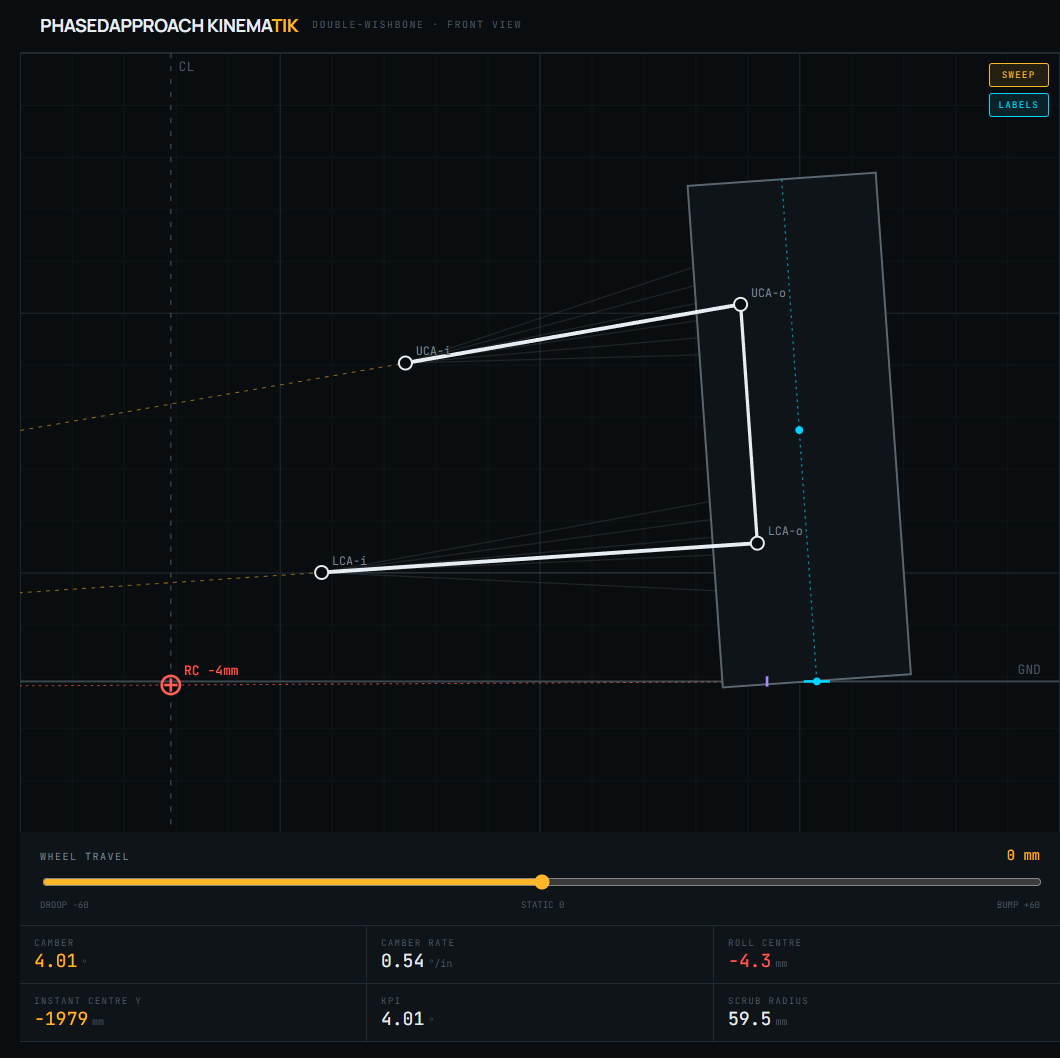
PhasedApproach Kinematik
2. Lightest legal control arms in titanium or 7075. Classes that permit alternate arms reward unsprung weight reduction more than almost any other dollar spent. Tube-style arms with rod ends where allowed; otherwise forged with race-spec ball joints. Knock a ton of weight off of a corner. Sometimes there will be an aftermarket part that works (like picking using lightweight rear upper control arms for a DST FRS or BRZ, versus the much more common lowers), sometimes you’ll have to roll your own. Remember to make sure the shock attachment is in a legal position WRT the motion ratio rule :).
3. Lightest legal brake kit. While brake kits have become fairly common in ST, frequently they’re a kit repurposed from another use case and there’s a bunch of weight that could be dropped through some custom fabrication, a careful reading of the rules, and taking a look at existing brake parts catalogs. It can also save a lot of money.
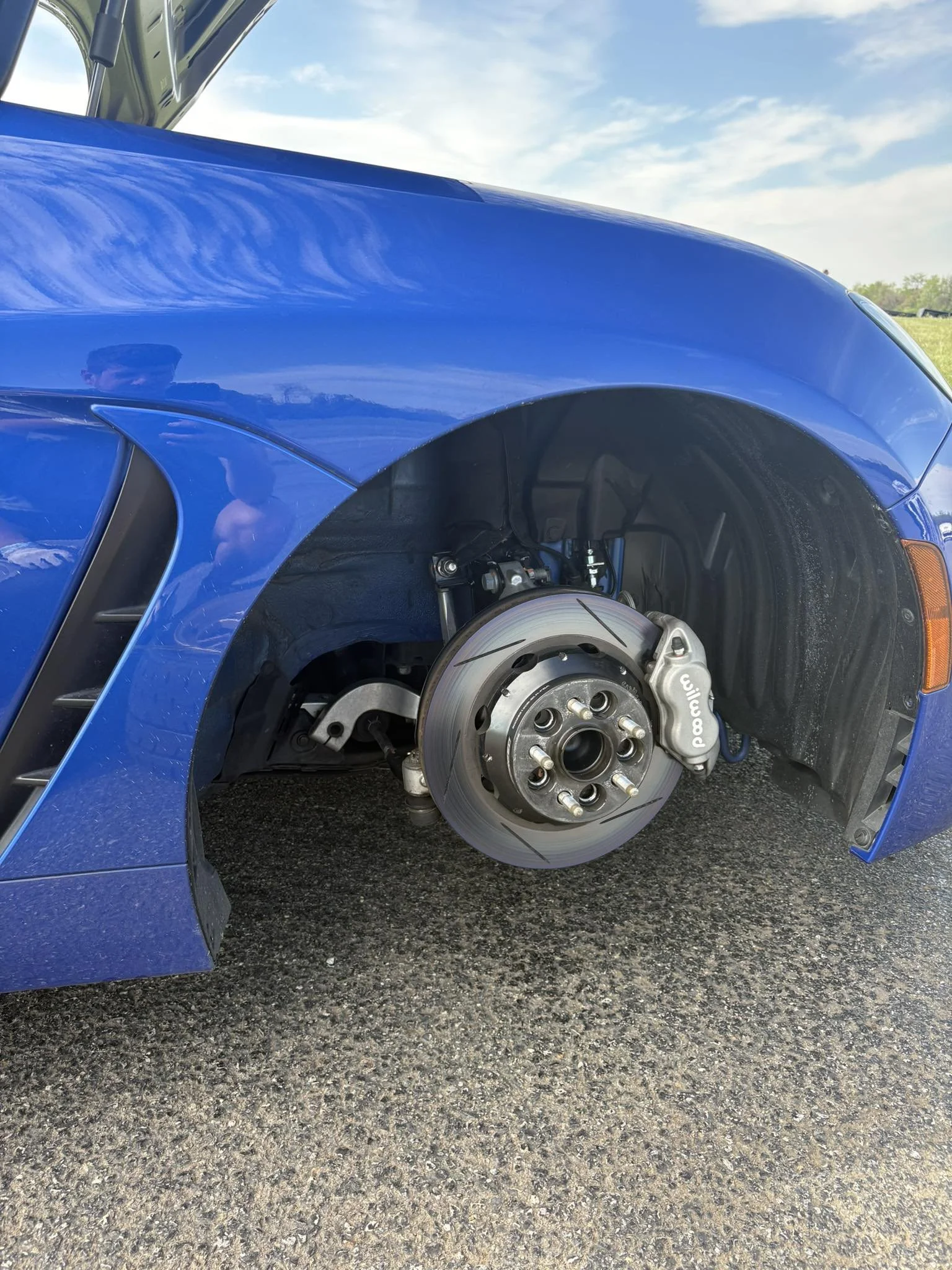
PhasedApproach C Street Touring Front Brake Kit
4. The 25-lb seat allowance read as a ballast/relocation tool. ST's alternate-seat allowance specifies weight and mounting requirements, not that the seat must remain functional as a seat for a human after modification. Once a compliant seat is installed and properly mounted per the rules, the seat itself is just a structural object bolted to the floor. Drill, lighten, or skeletonize the shell aggressively — the shell weight that remains can be concentrated low and centered (deep in the seat bottom, against the tunnel) rather than distributed up the seatback. Net effect: same legal seat-system weight on the scale, dramatically lower CG contribution from that ~25 lb. Watch the mounting/structural compliance language carefully — the seat has to remain attached per spec, which is about the mount, not about whether the shell is comfortable. This mostly applies to the passenger seat, the best contribution from the driver’s side is going to be the lightest seat that ALSO maximizes driver comfort and feedback. Frequently in codriven cars, sliders may be necessary. Not the right place to reduce weight necessarily.
5. Wheel spacers for free grip. To be continued…
6. Solid or near-solid differential mount bushings. For RWD and AWD cars this is the single biggest unlock for wheel hop and throttle-on transient response — the diff stops squirming under load, and you get cleaner power delivery without changing the diff itself. Delrin in the diff carrier with stock-location attachment is fully legal.
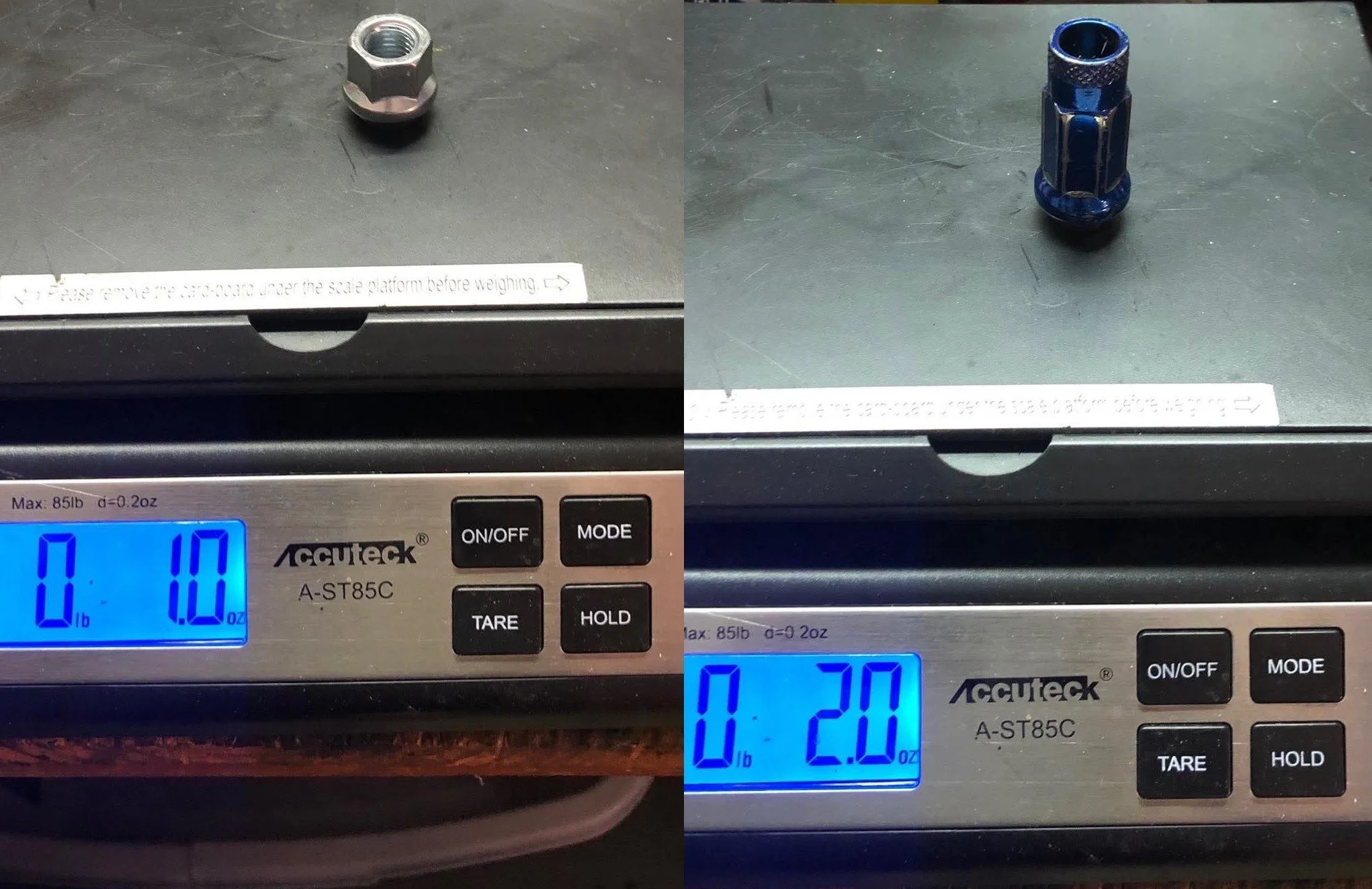
7. Lug Nuts. Silly, but just using cheap steel lug nuts saves a pound per car over the Muteki-style tuner lugs that are very common. Since you’ve already got to buy them, save money, and save unsprung, rotational mass. Easy.
8. Utilize all “substitutable” parts to pursue lightness. Lightweight oil pan. 14.A explicitly permits oil pan substitution. Most aftermarket pans are cast or fabricated aluminum; very few people commission magnesium. AZ91 or similar magnesium alloys save another 30-40% over aluminum at the same wall thickness. On engines where the pan is structural and substantial (BMW inline-sixes, certain Hondas, Subarus), that's 8-12 lb of low-mounted mass. Same thing with the diff cover depending upon the car. A few years back, aftermarket clutches and pressure plates were allowed, presumably for reliability reasons. This rule existed in Spec Miata, and quickly, people figured out this was an easy way to reduce driveline loss by running the lightest ones they could. Several have capitalized on this in Street Touring. Weight reduction improves both total grip and thrust.
9. Titanium exhaust at minimum wall thickness / diameter for performance. Most "lightweight" exhausts are 304 stainless and the builder picks a generous pipe diameter to look the part, with a huge muffler to encourage comfortable street driving. A titanium system sized to the actual flow requirement of your specific engine — not oversized for "race look" — typically saves 20-30 lb over OEM and another 5-10 lb over a typical stainless aftermarket system. Single-wall, minimum-gauge, smallest muffler that still meets sound limits. V-band the rear section and just swap this on site for race use if you’re street driving the car. You’ll have to learn to ignore the people that try to tell you the limit isn’t the limit. A small price to pay.
10. Minimum-fluid-load discipline. No rule mandates full reservoirs. Run the washer fluid bottle dry. Minimum fuel (gas is heavy!). No comment on other fluids, but there isn’t a rule on how much you need to fill them…there’s probably room for a clever radiator design here. Somewhat related, take a good look at the rulebook, and figure out what parts you can legally remove that are in / on the car. There’s often a lot left on the table here.
11. Custom shocks, engineered around weight, dimensional sanity, and application-specific valving. Okay, this might be a little bit of marketing.
Have any other good ones? Always interested in hearing what other people have come up with, or are presently employing.